
School procurement teams spend significant time selecting uniforms based on durability and cost. Yet textile safety for school uniforms rarely enters the conversation. New research shows that the very garments designed to create uniformity and reduce distractions may expose millions of children to harmful chemicals daily. From PFAS coatings to microplastic shedding, the materials in standard school uniforms present health risks that schools cannot ignore.
The Hidden Chemical Load in School Uniforms
Recent testing reveals alarming chemical concentrations in school uniforms across the UK and US. A 2022 study published in Environmental Science and Technology found PFAS chemicals in all 30 school uniforms tested. These per- and polyfluoroalkyl substances, marketed as stain-resistant treatments, persist indefinitely in the environment and human body.
The health implications are serious. PFAS exposure links to immune suppression, liver damage, and certain cancers. For children, whose bodies are still developing, these risks multiply. Dr. Jamie DeWitt from East Carolina University notes that children experience adverse health outcomes at lower PFAS concentrations than adults.
Beyond PFAS, uniforms contain flame retardants, formaldehyde-based anti-wrinkle treatments, and antimicrobial chemicals. A single polyester school shirt may harbor up to 15 different chemical formulations. These substances don't stay in the fabric – they transfer to children's skin throughout the school day, entering bloodstreams through dermal absorption.
Understanding Textile Safety for School Uniforms: Material Choices Matter
The predominant material in school uniforms – polyester – presents unique safety challenges. Derived from petroleum through energy-intensive processes, polyester creates environmental and health concerns from production through disposal. Manufacturing a single polyester school shirt generates approximately 3.8 kg of CO2 equivalent, contributing to climate change while producing garments that shed microplastics for years.
Research shows washing synthetic uniforms releases over 700,000 microplastic fibres per load. These particles bypass water treatment facilities, accumulating in waterways and food chains. Scientists now find microplastics in human lungs, blood, and placental tissue – exposure pathways that begin with the clothes children wear daily.
Natural fibres offer safer alternatives, though they require careful sourcing. Organic cotton eliminates pesticide residues and reduces chemical processing. However, conventional cotton production uses extensive pesticides and water resources. Schools must balance safety considerations with practical concerns like durability and cost when evaluating material options.
The Scale of Student Exposure
Eight million UK children wear school uniforms approximately 200 days annually. Students typically spend 35 hours weekly in direct contact with uniform fabrics – more time than they spend sleeping in their bedsheets. This prolonged exposure amplifies the impact of any chemical contamination.
The exposure begins early. Primary school children, who represent the largest uniform-wearing demographic, face chemical exposure during critical developmental periods. Their smaller body size means chemicals concentrate at higher levels relative to body weight. Additionally, younger children engage in more physical activity, increasing both skin contact and inhalation of fibres shed from uniforms.
Low-income families face disproportionate risks. They often purchase lower-quality uniforms containing higher chemical loads and fewer natural fibres. These families also lack resources to replace uniforms frequently, extending exposure periods to degrading fabrics and concentrated chemical residues.
Supply Chain Complexity and Accountability Gaps
The school uniform supply chain spans continents and involves numerous actors with misaligned incentives. Fibre producers in Asia sell to textile finishers who add chemical treatments. Garment manufacturers assemble products for branding companies, who sell through wholesalers to retailers. Schools select from available options, often with limited information about material composition or chemical content.
No single entity holds responsibility for end-to-end safety. Retailers claim they meet existing regulations, though UK textile regulations lag behind food and toy safety standards. Manufacturers operate in countries with varying chemical restrictions. Schools lack expertise to evaluate textile safety claims, relying on supplier assurances that may not reflect actual risk levels.
Information gaps compound the problem. Unlike food products with ingredient lists, uniforms rarely disclose chemical treatments. Even when schools request safety data, complex supply chains make tracing specific chemicals nearly impossible. This opacity prevents informed decision-making and accountability throughout the system.
Regulatory Landscape and Future Standards
The European Union leads global efforts to address textile safety through comprehensive regulations. The upcoming Ecodesign for Sustainable Products Regulation will mandate durability standards and chemical restrictions. EU plans include mandatory digital product passports revealing material composition and a 30% reduction target for synthetic fibre release by 2030.
The UK currently lacks equivalent textile safety frameworks. Post-Brexit, UK schools cannot rely on EU protections applying to imported uniforms. While REACH regulations still govern some chemicals, enforcement remains inconsistent. The regulatory gap leaves UK schools particularly vulnerable to substandard imports flooding the market.
Some progressive schools implement voluntary standards. They specify GOTS-certified organic materials, ban specific chemicals, and require supplier transparency. However, these remain exceptions. Most schools lack resources to develop and enforce comprehensive textile safety policies independently.
Practical Steps for Safer School Uniforms
Schools can take immediate action to improve uniform safety without awaiting regulatory changes. Start by requesting chemical content information from current suppliers. Many will struggle to provide comprehensive data – itself a red flag indicating supply chain opacity.
- Specify banned substances in procurement contracts, including PFAS, formaldehyde, and antimicrobials
- Require third-party safety certifications like OEKO-TEX or GOTS
- Choose natural or recycled materials over virgin polyester when possible
- Partner with suppliers offering transparent supply chains and chemical disclosure
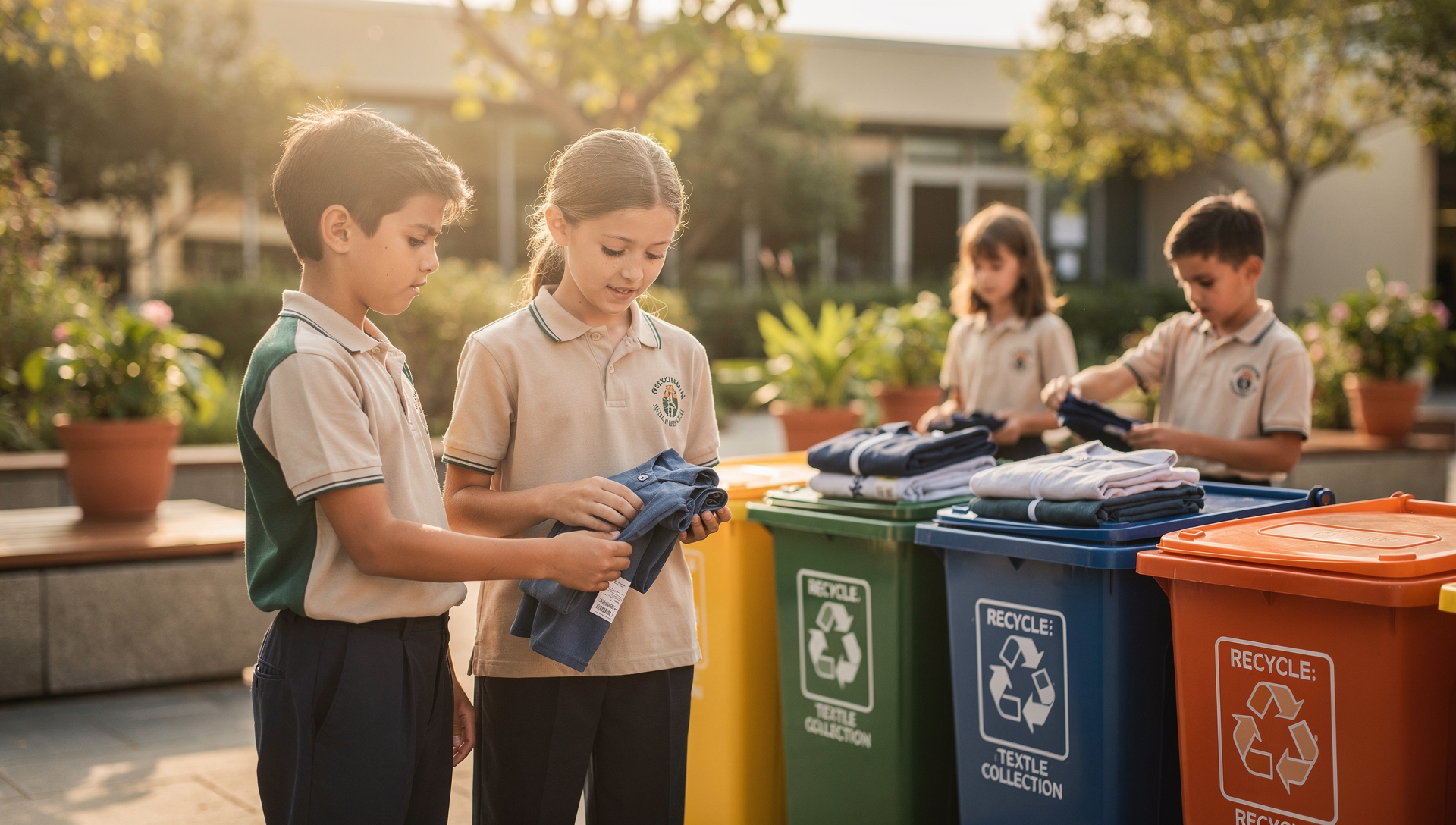
- Implement uniform recycling programs to reduce waste and exposure to degrading fabrics
Cost concerns often dominate procurement decisions, but the long-term health costs of chemical exposure far exceed short-term savings from cheaper uniforms. Schools should view safe uniforms as preventive health investments, similar to asbestos removal or lead pipe replacement – addressing hidden risks before they manifest as health crises.
Building Momentum for Change
Individual schools face challenges implementing textile safety standards alone. Collective action amplifies impact and reduces costs. School consortiums can negotiate better prices for safe uniforms through bulk purchasing. Multi-academy trusts can develop unified safety standards, creating market pressure for suppliers to improve offerings.
Parent communication plays a vital role. When families understand the health implications of textile choices, they support paying slightly more for safer options. Transparency about uniform composition and safety testing builds trust while educating the community about broader environmental health issues.
Forward-thinking schools can position themselves as leaders in student health protection. Just as schools once pioneered healthy meal programs and mental health support, textile safety represents the next frontier in comprehensive student wellbeing. Early adopters will set standards others follow, protecting their students while influencing industry practices.
The evidence is clear: current school uniforms expose children to preventable chemical hazards. While systemic change requires time, every school can begin improving textile safety today. By demanding transparency, specifying safer materials, and educating stakeholders, school leaders can protect student health while catalyzing broader industry transformation. The question isn't whether to act, but how quickly schools will recognize uniforms as a critical health and safety issue deserving immediate attention.