
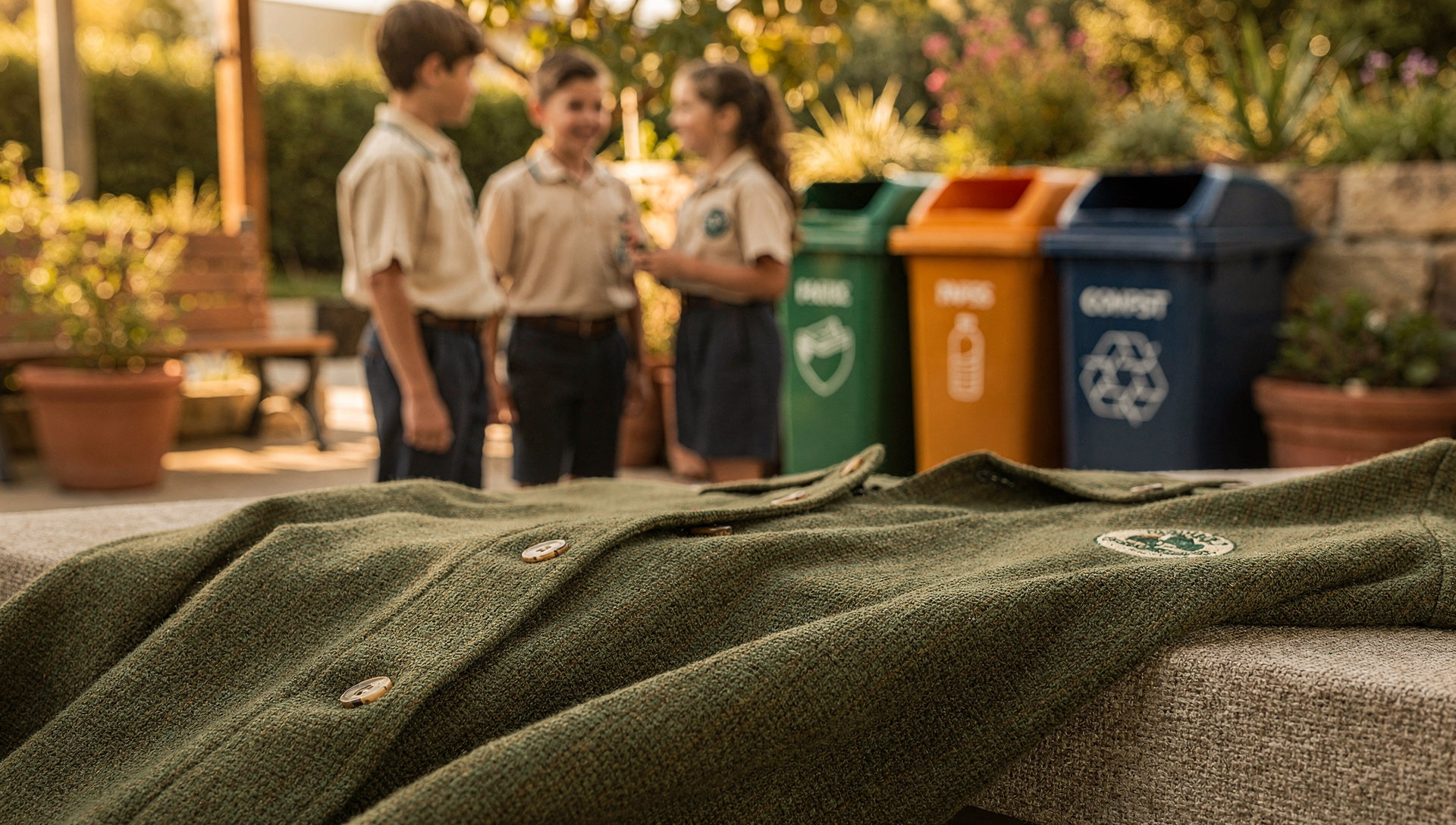
School uniforms touch every aspect of institutional responsibility: student health, environmental impact, and educational equity. With students wearing uniforms over 1,200 hours annually, the choice between traditional synthetic and eco-friendly school uniforms directly affects both immediate wellbeing and long-term environmental outcomes. Recent findings about PFAS contamination in synthetic fabrics have transformed sustainable uniform procurement from optional to essential.
The numbers paint a clear picture. Traditional polyester uniforms shed approximately 700,000 microplastic fibers per wash cycle. Multiply this by 540 million students wearing uniforms globally, and we're facing billions of microplastics entering waterways annually. Schools increasingly recognize that uniform decisions affect not only procurement budgets but also carbon footprints, student health, and institutional credibility.
Understanding Eco-Friendly School Uniforms: Materials Matter
Material selection forms the foundation of sustainable uniforms. Natural fibers—organic cotton, hemp, linen, and wool—offer superior breathability and complete biodegradability compared to petroleum-based synthetics. GOTS-certified organic cotton uses 91% less water than conventional cotton while eliminating pesticide exposure for farmers and students. Hemp fabrics provide exceptional durability, lasting 3-4 times longer than cotton alternatives, though availability remains limited in many markets.
Manufacturing processes carry equal weight. Ethical production standards verify fair wages, safe working conditions, and transparent supply chains through certifications like Fair Trade, SA8000, or WRAP. These standards address the reality that 75% of global garment workers currently earn below living wages. Schools must verify that uniform suppliers maintain auditable supply chains to prevent child labor and exploitative practices.
Carbon-neutral production represents the emerging standard. Leading suppliers now track emissions throughout their supply chains, achieving reductions of 40-60% through renewable energy adoption. Remaining emissions are offset through verified programs. Some manufacturers go further, implementing closed-loop water systems and zero-waste cutting techniques that reduce material waste by up to 15%.
Chemical Safety: PFAS and Beyond in School Textiles
Per- and polyfluoroalkyl substances (PFAS), used for stain and water resistance, present serious health risks that schools can no longer ignore. These 'forever chemicals' accumulate in human tissue, linking to immune disruption, hormone interference, and developmental issues. A 2023 study found PFAS in 65% of tested school uniforms, with 23% exceeding recommended safety limits.
Beyond PFAS, conventional uniforms often contain formaldehyde for wrinkle resistance, heavy metal dyes, and optical brighteners. Children absorb these chemicals through skin contact, with absorption rates increasing during physical activity when pores open. Natural fiber uniforms treated with plant-based dyes and finishes eliminate these exposure risks entirely.
- Request chemical content disclosure from all uniform suppliers
- Specify PFAS-free requirements in procurement contracts
- Prioritize OEKO-TEX Standard 100 certification for chemical safety
- Consider independent testing for high-volume purchases
Procurement Strategies for Eco-Friendly School Uniforms
Successful sustainable uniform procurement begins with clear specifications. Define minimum requirements for organic content (recommend 70%+), ethical certifications, and chemical safety standards. Include sustainability criteria in your RFP scoring matrix, weighting environmental factors at 20-30% of total evaluation points.
Price comparisons require lifecycle analysis. While organic uniforms may cost 15-25% more initially, their durability often delivers lower per-wear costs. Factor in reduced replacement frequency, health benefits, and alignment with institutional values. Some schools offset higher costs through bulk purchasing agreements or phased implementation over 2-3 years.
Vendor evaluation should examine the entire supply chain. Request factory audit reports, carbon footprint data, and water usage metrics. Leading suppliers provide full transparency, including fabric sourcing locations and transportation methods. Beware of vague sustainability claims without third-party verification—genuine eco-friendly suppliers welcome detailed scrutiny.
Implementation: Making the Switch Practical
Transitioning to sustainable uniforms doesn't require immediate wholesale change. Many schools succeed with phased approaches, starting with new student cohorts or specific garment types. Begin with high-wear items like shirts and jumpers, where durability benefits are most apparent. This allows budget adjustment while building community buy-in.
Communication drives adoption success. Share the rationale with parents, emphasizing health benefits and long-term cost savings. Provide care instructions that maximize garment lifespan—cold washing, line drying, and proper storage can extend uniform life by 50%. Consider hosting information sessions where families can feel fabric quality differences firsthand.
Establish reuse programs from day one. Uniform exchanges reduce waste and costs while building community connections. Digital platforms can facilitate peer-to-peer resale, while school-managed programs ensure quality control. Some schools report 30-40% participation rates in well-organized exchange programs, significantly reducing environmental impact and family expenses.
Measuring Impact and Continuous Improvement
Track key metrics to demonstrate program success. Monitor uniform lifespan, participation in reuse programs, and cost per student per year. Survey families about garment quality, comfort, and durability. These data points support program refinement and justify continued investment in sustainable options.
Environmental impact calculations strengthen your sustainability narrative. A 500-student school switching from polyester to organic cotton eliminates approximately 350 million microplastic fibers annually. Carbon footprint reductions typically range from 30-50% depending on transportation distances and manufacturing processes. Share these achievements in annual reports and accreditation documentation.
Stay informed about textile innovations. Emerging options include uniforms made from agricultural waste, algae-based dyes, and biodegradable synthetic alternatives. Join procurement consortiums or sustainability networks to share experiences and negotiate better terms collectively. The uniform industry is evolving rapidly—schools that engage actively shape better options for everyone.
Conclusion: Beyond Uniforms to Institutional Leadership
Sustainable uniform procurement demonstrates institutional values in action. Every student wearing an eco-friendly uniform becomes a daily reminder of your school's commitment to their health and environmental stewardship. The decision impacts far beyond the schoolyard—influencing family purchasing decisions and student environmental awareness for years to come.
Start where you are. Whether requesting PFAS-free options from current suppliers or planning a complete sustainable transition, every step matters. The path to eco-friendly school uniforms isn't just about changing what students wear—it's about preparing them for a world where sustainability isn't optional but essential. Your procurement decisions today shape both immediate student wellbeing and their environmental legacy tomorrow.